New York City has announced the broadest student-facing AI moratorium in the country. For the 2026-2027 school year, generative AI will be off-limits for roughly 600,000 students from 2-K through eighth grade, companion chatbots will be blocked in every grade, and new...
Resources
SIIA Statement on the 2025 PISA Results
The following statement from the Software & Information Industry Association (SIIA) can be attributed to Sara Kloek, Vice President of Education and Youth Policy. Today’s release of the 2025 Program for International Student Assessment makes one thing clear: there...
SIIA Statement on New York City Public Schools’ AI Policy and Generative AI Moratorium
The following statement from the Software & Information Industry Association (SIIA) can be attributed to Sara Kloek, Vice President, Education and Youth Policy. SIIA thanks Mayor Mamdani, Chancellor Samuels, and New York City Public Schools for their leadership on...
SIIA Statement on the U.S. Department of Education’s Guidance on Education Technology and Screen Time in Schools
The following statement from the Software & Information Industry Association (SIIA) can be attributed to Sara Kloek, Vice President, Education and Youth Policy. The Software & Information Industry Association (SIIA) thanks the U.S. Department of Education for...
SIIA Applauds District Court Order Denying Plaintiff’s Motion for Partial Summary Judgement in Cherkin v PowerSchool Holdings, Inc.
The following statement can be attributed to Chris Mohr, President, the Software & Information Industry Association. The Software & Information Industry Association (SIIA) applauds the District Court’s recent order denying the plaintiffs’ motion for partial...
The Claim That Gen Z Is “Less Cognitively Capable” Than Their Parents Doesn’t Hold Up
A widely shared claim holds that Generation Z is the first generation to end up less cognitively capable than its parents. The idea gained traction after neuroscientist Dr. Jared Cooney Horvath told the U.S. Senate that decades of rising cognitive performance had...
The Real Difference Between EdTech and Consumer Apps
If you're a parent, you’ve likely worried about how much time your kids spend on screens. That’s a fair concern, but there’s an important detail to notice: the app a teacher uses for teaching fractions is not the same as scrolling through social media or watching...
A Practical Guide for Choosing Quality EdTech
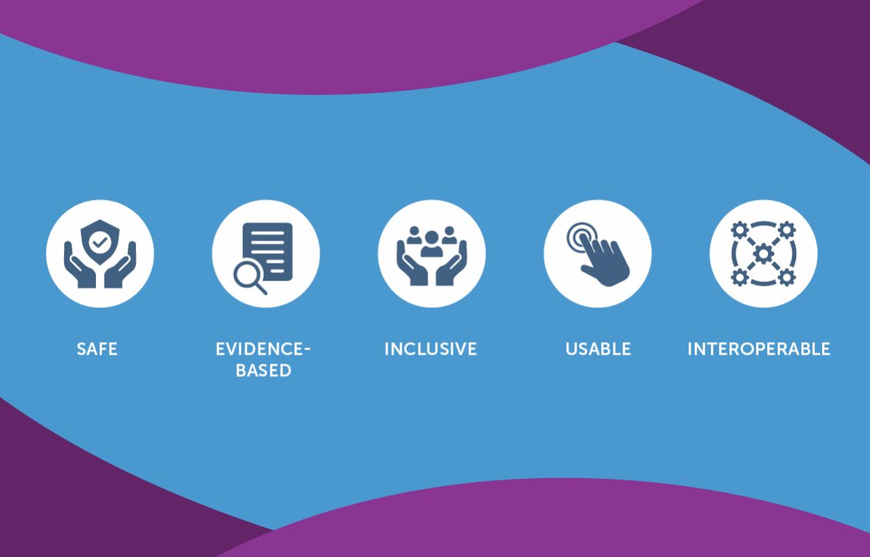
School officials weighing thousands of recommended digital tools need a clear way to judge which ones are safe, effective, and worth the investment. The EdTech Quality Collaborative (EQC) offers exactly that, and Ed Tech Works is sharing it as a resource. The EQC...
The Evidence Is In: Purpose-Built EdTech Meets a Higher Standard
The 2026 EdTech Evidence Report, published by Instructure with InnovateEDU, moves the conversation from whether technology belongs in schools to which tools belong, for what purpose, and with what evidence. To help inform this important conversation, the report...
Contact
Join the initiative
or get in touch
Have a seat at the table
If your organization serves the educators and students who rely on digital learning tools, the question isn't whether screen-time legislation will affect you — it's when. Let's talk about your role in the initiative.